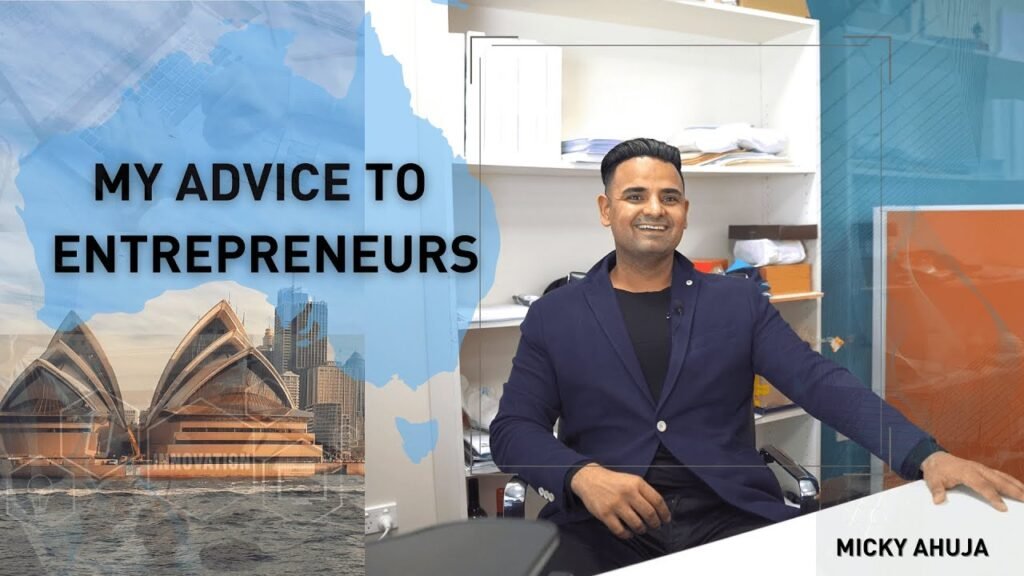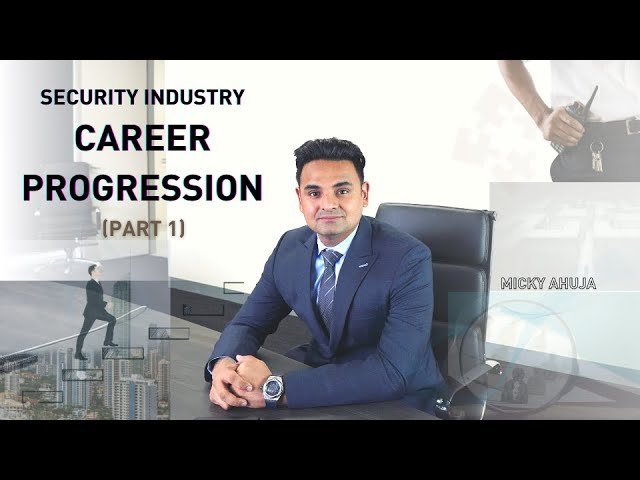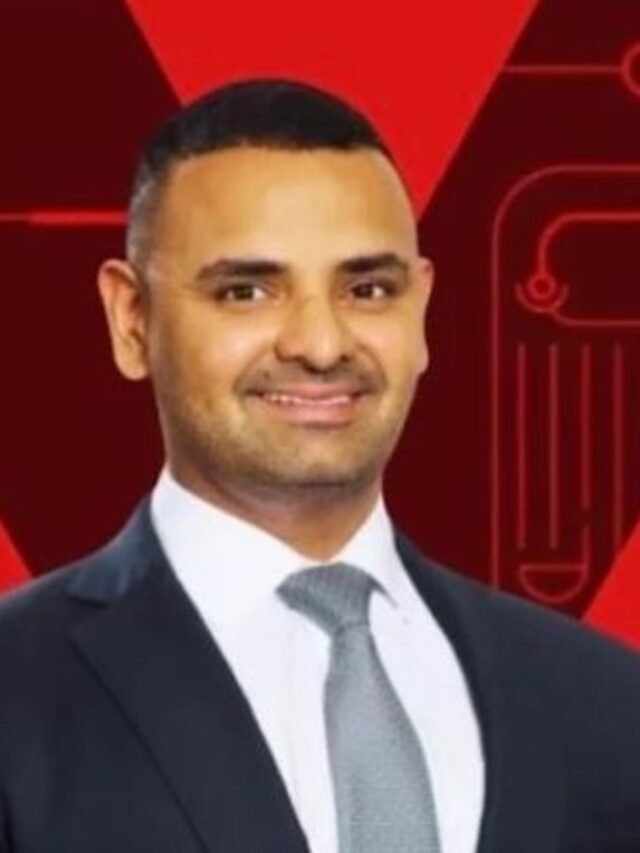
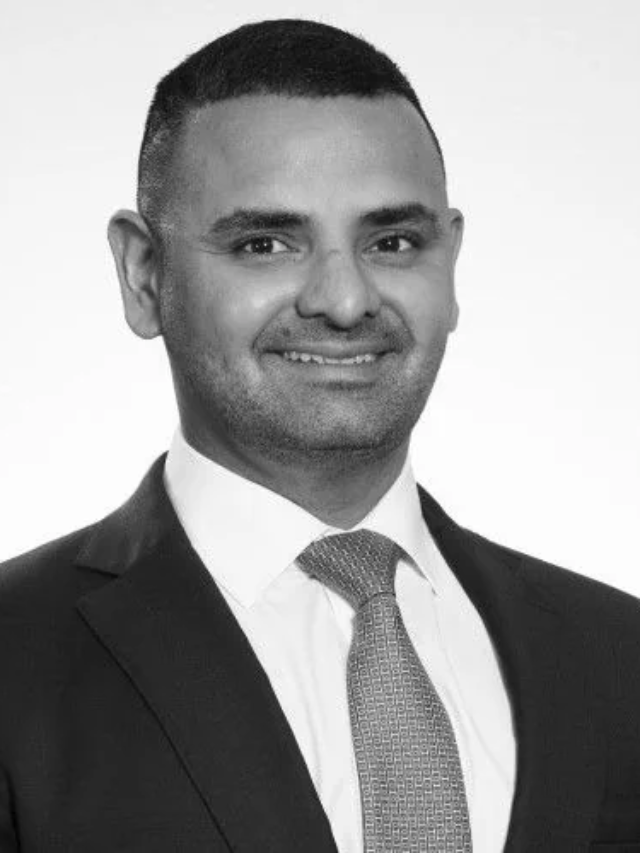


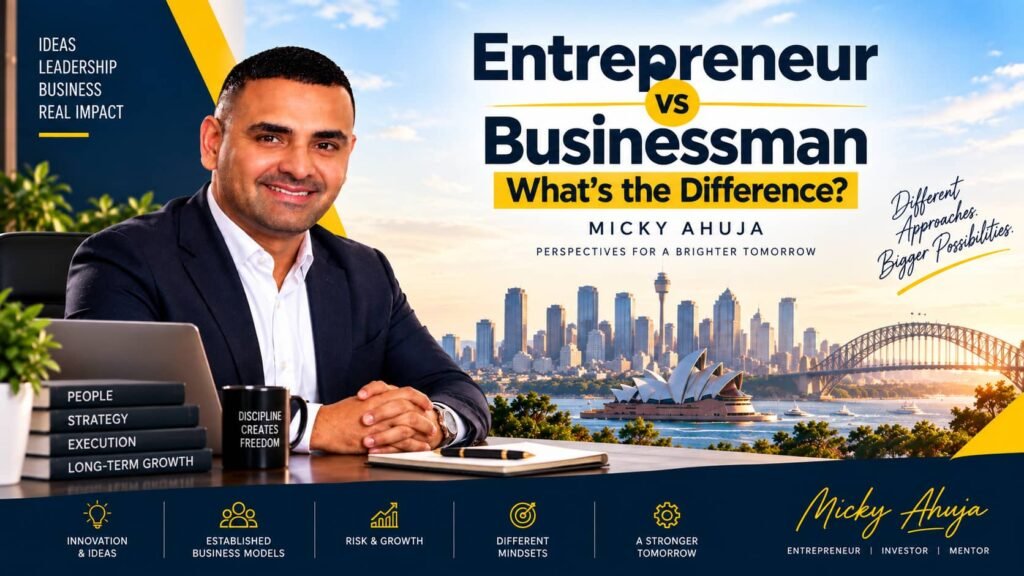
The words entrepreneur and businessman are often used interchangeably. Both can build companies, create employment, serve customers and contribute to economic growth. Yet when people discuss the difference between an entrepreneur and a businessman, they are usually talking less about job titles and more about the way someone approaches opportunities, risk, innovation and growth. The distinction is not absolute. A businessman can be highly innovative, while an entrepreneur can eventually become the leader of a well-established business. In many cases, one person can comfortably be described as both. From Micky Ahuja’s perspective on entrepreneurship and business, what matters more than the label is how a person identifies opportunities, makes decisions, responds to uncertainty and builds something capable of creating lasting value.
What Is a Businessman?
A businessman or businessperson is generally someone who owns, manages or operates a commercial organisation. The business may follow an established model, compete in an existing market and provide products or services that customers already understand. Success often depends on execution: delivering consistently, controlling costs, understanding customers, managing employees and remaining competitive. There is sometimes an unfair assumption that businessmen simply copy existing ideas while entrepreneurs create new ones. Real business is rarely that simple. Even a company operating in a mature industry may need to continuously improve its technology, customer experience, processes and strategy to remain relevant. A capable businessman therefore needs judgement, discipline and an understanding of how different parts of an organisation work together. For Businessman Micky Ahuja, this practical side of business is important because an idea alone does not create a sustainable organisation. Businesses ultimately need customers, people, systems and financial discipline to continue operating and growing.
What Is an Entrepreneur?
An entrepreneur is commonly associated with identifying an opportunity and building a venture around it. That opportunity might involve creating a new product, improving an existing service, introducing technology into a traditional industry or finding a better way to solve a familiar problem. Entrepreneurs are often comfortable beginning with incomplete information because new opportunities rarely arrive with guaranteed outcomes. However, entrepreneurship should not be confused with simply taking large risks. Strong entrepreneurs try to understand the uncertainty they are entering. They research markets, listen to customers, test assumptions and adjust when evidence shows that the original plan needs improvement. From Micky Ahuja’s entrepreneurial perspective, the ability to recognise an opportunity is only the beginning. Turning that opportunity into something sustainable requires execution, resilience and the willingness to accept responsibility for the decisions made along the way.
Entrepreneur vs Businessman: The Difference Is Often in the Approach
One useful way to understand the entrepreneur vs businessman difference is to look at their typical starting points. A businessman may enter a market where customer demand and the commercial model are already established. The challenge is often to operate more effectively, provide greater value or compete more successfully. An entrepreneur may begin by identifying a problem that is not being solved particularly well and then develop a new approach around it. Neither approach is automatically superior. Established markets can provide enormous opportunities for improvement, while completely new ideas can fail if customers do not see enough value in them. The real difference is often the nature of the opportunity being pursued. One approach may focus heavily on optimising an existing model, while the other may begin by questioning whether the existing model needs to change.
Innovation Is Not Exclusive to Entrepreneurs
Innovation is one of the characteristics most frequently associated with entrepreneurship, but it would be misleading to suggest that established business owners do not innovate. Every successful organisation eventually needs to adapt. Customer expectations change, technology advances, competitors improve and economic conditions create new pressures. A businessman who refuses to evolve may eventually discover that the market has moved ahead. At the same time, entrepreneurs need more than innovation to succeed. A creative concept that cannot attract customers, generate sustainable revenue or be delivered consistently remains an idea rather than a successful business. Micky Ahuja’s perspective on business brings these two sides together: innovation can create opportunity, but disciplined execution helps turn opportunity into something commercially meaningful. The strongest organisations often combine entrepreneurial thinking with strong business management.
How Entrepreneurs and Businessmen Approach Risk
Risk is another area commonly used to distinguish entrepreneurs from businessmen. Entrepreneurs are often described as risk-takers because they may enter new markets, develop unfamiliar products or challenge established ways of working. Businessmen are sometimes described as more cautious because they may operate within proven models. In practice, both face risk; the type of risk may simply be different. An entrepreneur can face uncertainty around whether the market will accept a new idea. An established businessman may face competitive pressure, rising costs, changing regulations, employee challenges or the possibility that an existing business model will become outdated. For Micky Ahuja, the more meaningful distinction is between taking a calculated risk and making a decision without sufficient thought. Good business judgement involves gathering available information, considering possible outcomes and deciding whether the potential opportunity justifies the exposure.
Different Mindsets, but a Shared Need for Customers
Entrepreneurial thinking often begins with questions such as, What could be done differently? Where is the opportunity? What problem has nobody solved effectively? A business-focused mindset may place greater emphasis on questions such as, How can we improve operations? How can we serve customers more consistently? How can we strengthen margins and grow sustainably? These questions are different, but they are not competing philosophies. A healthy organisation needs both. Constant experimentation without operational discipline can create instability, while operational efficiency without curiosity can eventually lead to stagnation. Whether someone identifies primarily as an entrepreneur or businessman, customers ultimately determine whether the business has a future. People must see enough value in the product or service to choose it, pay for it and ideally return to it. That commercial reality connects entrepreneurship and traditional business far more closely than many simplified comparisons suggest.
An Entrepreneur Creates an Idea, but a Business Leader Builds the Organisation
Launching a venture can require creativity, courage and persistence, but growth introduces a different challenge. Once customers begin arriving and the workload increases, the founder cannot remain responsible for every task indefinitely. Employees need to be hired, processes need to be developed and responsibilities need to be delegated. This is where entrepreneurship begins overlapping heavily with business leadership. Micky Ahuja’s approach to entrepreneurship and leadership highlights the importance of moving beyond individual effort. A founder may provide the original direction, but a sustainable company eventually requires people who can make decisions and take responsibility within their own areas. The ability to build teams becomes increasingly important because an organisation that depends entirely on one individual will eventually encounter limits to its growth.
Can a Businessman Also Be an Entrepreneur?
Absolutely. In fact, the distinction between the two often becomes less meaningful as a company develops. Someone may begin as an entrepreneur by recognising an opportunity and launching a new venture. Once that venture becomes established, the same person needs to think like a businessman: managing finances, improving operations, building teams and creating sustainable systems. Years later, that person may again need an entrepreneurial mindset to launch a new service, enter another market or respond to technological change. This is why Micky Ahuja does not need to fit exclusively into either the “businessman” or “entrepreneur” category when discussing business leadership. The characteristics can coexist. Entrepreneurial thinking helps people discover possibilities, while business discipline helps organisations turn those possibilities into repeatable results.
Growth Requires More Than a Good Idea
One of the biggest misconceptions surrounding entrepreneurship is that the original idea is the most important part of building a successful company. Ideas matter, but execution determines what happens to them. Two people can recognise the same opportunity and produce completely different outcomes depending on how they respond. One may struggle to understand customers or manage costs, while another may build reliable systems, recruit capable people and continuously improve the offering. For entrepreneur Micky Ahuja, business growth should therefore be viewed as an ongoing process rather than the result of one breakthrough moment. As an organisation expands, the questions become more complex. How should responsibilities be divided? Which opportunities deserve investment? What should be automated? Where does the company need stronger leadership? Sustainable growth requires the entrepreneur’s ability to see possibilities and the businessperson’s ability to turn those possibilities into structured operations.
Leadership Connects Entrepreneurship and Business
Regardless of which label someone prefers, leadership becomes increasingly important as a company grows. A founder who can generate ideas but cannot communicate direction will struggle to build an effective team. Similarly, a technically capable businessman may find growth difficult if employees lack clarity, accountability or trust. Leadership means creating an environment where people understand what they are responsible for and how their work contributes to the organisation’s broader goals. It also means accepting responsibility when decisions do not produce the expected results. Businessman Micky Ahuja’s perspective on leadership is relevant here because building a company involves more than financial performance. Organisations are ultimately made up of people, and long-term growth requires developing teams capable of taking ownership rather than waiting for the founder to solve every problem.
Entrepreneur vs Businessman: Which Is Better?
Trying to decide whether an entrepreneur or businessman is “better” misses the point. Businesses need innovation as well as execution. They need people willing to explore new opportunities and people capable of building systems around those opportunities. In smaller companies, the same person may need to perform both roles. They might think like an entrepreneur when exploring a new market in the morning and think like a businessman when reviewing costs and operational performance in the afternoon. What matters is recognising which mindset a particular situation requires. A company focused only on innovation may struggle to build consistency, while one focused exclusively on existing processes may miss opportunities for change.
Micky Ahuja’s Perspective: Think Like an Entrepreneur, Build Like a Businessman
Perhaps the most useful way to understand the difference between an entrepreneur and a businessman is not to separate them completely. Entrepreneurship encourages curiosity, opportunity recognition, innovation and the willingness to challenge assumptions. Business management brings discipline, structure, financial awareness, leadership and consistent execution. When these qualities work together, ideas have a better chance of becoming sustainable organisations.
For Micky Ahuja, the more important question is therefore not whether someone should call themselves an entrepreneur or a businessman. The better question is whether they can recognise worthwhile opportunities and then take responsibility for turning those opportunities into something valuable. Starting a company may require entrepreneurial thinking, but building one for the long term requires much more. It requires customers, capable people, sound decisions, adaptability and the discipline to keep improving when the initial excitement of starting has passed.
Ultimately, entrepreneurs and businessmen are not necessarily opposites. They can represent different stages, perspectives and skills within the same business journey. The entrepreneur may ask, “What could we create?” The businessman may ask, “How can we make it work consistently and sustainably?” Strong business leadership benefits from asking both.