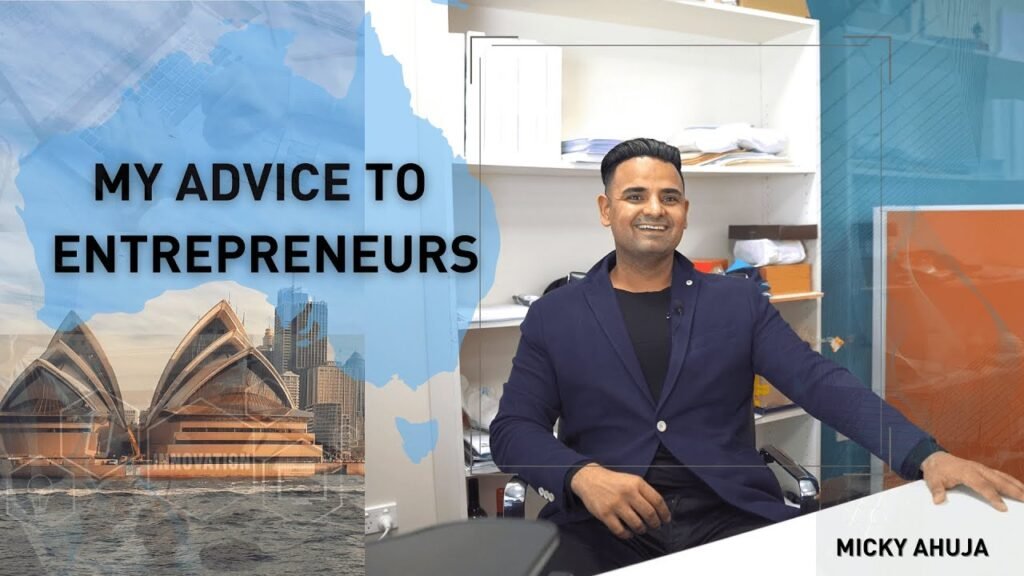





Entrepreneurship is often described through the milestones that people can see from the outside: starting a business, finding customers, building a team, expanding operations, entering new markets or reaching another stage of growth. What receives far less attention is everything that happens between those milestones—the uncertainty, difficult decisions, changing circumstances, mistakes, relationships, unexpected opportunities and constant need to adapt. My entrepreneurial journey has reinforced one important belief: success is rarely the result of one brilliant idea or one defining moment. It develops gradually through persistence, experience, leadership, continuous learning and the willingness to keep moving forward even when the path ahead is not completely clear. Every entrepreneur has a different story because industries, circumstances, ambitions and challenges are different, but many of the lessons learned along the way are surprisingly universal. For me, some of the most important lessons have involved resilience, adaptability, people, leadership, financial discipline, relationships and learning to think beyond immediate results. Entrepreneurship has taught me that building a business is not simply about what you create; it is also about who you become through the process of creating it.
Entrepreneurship Begins with Taking the First Step
One of the biggest barriers to entrepreneurship is waiting for the perfect moment. People can spend years developing ideas, researching markets, creating plans and imagining what they might eventually build, but there will rarely be a moment when every question has been answered and every risk has disappeared. At some point, progress requires action. That does not mean entrepreneurs should make reckless decisions or ignore preparation. Research, planning, financial understanding and knowledge of the market are important, but there is a limit to what can be learned before entering the real world. Customers, employees, competitors and changing market conditions will quickly reveal things that even the most detailed business plan cannot fully predict. One of the lessons I have learned is that entrepreneurs need to become comfortable making informed decisions without having perfect information. You evaluate what you know, consider the risks, make the strongest decision available and remain prepared to adjust when new information emerges. The first step does not need to be perfect; it simply needs to move you forward. Once you begin, experience becomes one of your greatest teachers because every conversation, decision, success and setback gives you information that can influence what you do next.
A Great Idea Is Only the Beginning
People often associate entrepreneurship with discovering a brilliant idea, but an idea is only the starting point. Execution determines whether that idea can become a sustainable business. A promising concept still requires customers who see value in it, capable people who can help deliver it, financial discipline, operational systems, consistent service and the ability to evolve as circumstances change. Entrepreneurs eventually discover that building a business involves solving hundreds of smaller problems that may have very little to do with the original idea. This is where persistence becomes particularly important. There will be periods when progress is obvious and exciting, but there will also be periods when considerable effort appears to produce very little movement. Building something meaningful requires the discipline to continue working through both. Over time, I have come to appreciate that entrepreneurship is less about waiting for extraordinary moments and more about consistently doing ordinary things well. Great businesses are often built through thousands of decisions and improvements that individually appear small but collectively create something significant.
Resilience Is Built Through Experience
No entrepreneurial journey is free from setbacks. Plans change, opportunities disappear, costs increase, customers change their minds, people make mistakes and external circumstances can create challenges that nobody anticipated. It can be tempting to view every setback as evidence that something has gone wrong, but experience teaches a different lesson. Difficult periods are often where some of the greatest learning takes place. Resilience does not mean pretending that problems do not matter or continuing blindly regardless of circumstances. It means acknowledging reality, understanding what happened, identifying what can be learned and deciding what should happen next. Some situations require persistence, while others require a change in direction, and knowing the difference is one of the abilities entrepreneurs develop through experience. You cannot control every event affecting a business, but you can influence how you respond to it. The objective is therefore not to avoid every difficult situation—that would be impossible—but to become increasingly capable of responding to challenges with perspective, discipline and a willingness to learn.
Adaptability Is Essential for Long-Term Business
Business environments never remain static. Technology evolves, customer expectations change, competitors improve, new industries emerge and established ways of working become less effective. Something that worked extremely well several years ago may not produce the same results today, which means entrepreneurs cannot rely exclusively on previous success. I believe one of the most dangerous positions for a business leader is becoming convinced that because something worked in the past, it must continue working in the future. Experience is valuable, but experience should give us better judgement rather than prevent us from questioning our assumptions. Adaptability requires paying attention to what is happening around the business, listening to customers, understanding employees, monitoring developments within the industry and exploring emerging technologies that could improve how the organisation operates. The objective should be to build an organisation capable of learning continuously. When businesses make improvement part of their everyday culture, adaptation becomes an ongoing process rather than something that happens only when circumstances force change.
People Are at the Heart of Every Business
Entrepreneurs often begin by focusing intensely on products, customers, revenue and operations, but as a business develops another reality becomes increasingly clear: people are central to almost everything. No entrepreneur can build a significant organisation alone. Employees communicate with customers, manage operations, solve problems, develop ideas, make decisions and represent the organisation every day. Building a capable team therefore becomes one of the most important responsibilities of leadership, and that responsibility extends far beyond recruitment. People need clarity about expectations, constructive feedback, opportunities to develop and leaders who are prepared to communicate and listen. Respect also matters. Strong workplaces are not created simply by placing company values on a website or office wall; they are created through everyday behaviour—how people communicate with one another, how disagreements are managed, how contributions are recognised, how mistakes are addressed and how accountability is applied. A workplace culture develops gradually through thousands of interactions, and leadership becomes visible in these seemingly small moments.
Leadership Is a Responsibility, Not a Title
My understanding of leadership has evolved throughout my entrepreneurial journey. Early in business, it can be easy to think leadership means having all the answers and making every decision yourself. However, as organisations grow, it becomes clear that leadership is much broader and more nuanced than that. A leader’s role is not only to provide direction but also to create an environment where capable people feel empowered to contribute their ideas, skills and perspectives. This shift requires a deeper level of trust in others and a willingness to step back when appropriate. It also requires strong listening skills because effective leadership is built on understanding the people you are working with, not simply directing them. Sometimes the person closest to a problem understands it better than the most senior person in the organisation, and good leaders need enough confidence to acknowledge that they do not always have the best answer. Leadership also requires consistency because employees pay attention to what leaders do, particularly during difficult periods. How someone behaves when everything is going well tells you something about them, but how they behave when pressure increases often tells you much more. For me, leadership means accepting responsibility for decisions, communicating expectations clearly, creating accountability and continuing to learn from the people around you.
Listening Can Become a Competitive Advantage
Entrepreneurs are naturally passionate about their ideas, and while that enthusiasm can be valuable, it can also create blind spots. One lesson I continue to value is the importance of listening. Customers can explain what they genuinely value and where their frustrations exist. Employees can identify operational problems that may be invisible from a leadership position. Advisers can challenge assumptions, while business partners can provide perspectives shaped by completely different experiences. Listening does not mean agreeing with every opinion or implementing every suggestion. An entrepreneur still needs to evaluate information and make decisions, but those decisions are often stronger when they have been informed by multiple perspectives. Some of the most useful feedback can also be uncomfortable to hear. It is easy to listen when someone confirms what you already believe; the greater challenge is remaining open when someone identifies something that needs to improve. That is often where genuine development begins. Businesses that create an environment where people can contribute ideas and identify problems may also discover opportunities that would otherwise have remained hidden.
Mistakes Can Become Valuable Business Education
Every entrepreneur makes mistakes. Some are relatively small, while others can be expensive, frustrating or difficult. The important question is not whether mistakes occur but what happens afterwards. Blaming circumstances may provide temporary comfort, but it rarely creates improvement. A better approach is to examine what happened objectively. Was there insufficient information? Was the decision rushed? Were the wrong assumptions made? Was communication unclear? Did the business lack an appropriate process? Was a warning sign overlooked? When a mistake produces a lesson that improves future decisions, the experience can create value. Entrepreneurs should certainly try not to repeat mistakes, but they should not become paralysed by the fear of making them either. A business that never makes mistakes may simply be a business that never attempts anything difficult. Entrepreneurship requires judgement, and judgement improves through a combination of knowledge and experience. Some lessons can be learned from books and advisers, while others become meaningful only after experiencing them personally.
Financial Discipline Supports Sustainable Growth
Vision and ambition are exciting parts of entrepreneurship, while financial discipline receives considerably less attention, but understanding the numbers is fundamental to building a sustainable organisation. Revenue alone does not define the health of a business. Entrepreneurs need visibility over costs, margins, cash flow, commitments and the financial consequences of growth. Rapid expansion can create its own challenges because hiring too quickly, committing to unnecessary expenses or expanding before operational systems are ready can place pressure on an otherwise promising organisation. This has reinforced for me the importance of balancing ambition with discipline. Growth should strengthen a business rather than simply make it larger. The objective should not be expansion at any cost but sustainable growth supported by appropriate systems, capable people and responsible financial management. Entrepreneurs need ambition to identify where a business could go, but they also need discipline to understand when, why and how it should get there.
Reputation Is Built Through Consistency
A business reputation is not created by a logo, advertising campaign, website or social media profile. It develops through experiences and repeated interactions. Customers remember whether commitments were delivered, employees remember how communication was handled, and business partners remember whether relationships were approached professionally. This is why consistency matters. No organisation or individual will handle every situation perfectly, but businesses can establish clear standards around professionalism, accountability, communication and the way relationships are managed. Over time, repeated actions influence reputation. For entrepreneurs, this is an important reminder that long-term credibility needs to be earned continuously rather than simply communicated through marketing. The strongest reputation is one supported by the experience people have when they actually interact with the organisation.
Innovation Does Not Always Require Reinvention
Innovation is sometimes presented as something dramatic—a revolutionary technology, disruptive product or completely new industry—but some of the most valuable innovation occurs through incremental improvement. A customer experience can be simplified, technology can remove repetitive administration, employees can be given better information, processes can become more efficient and communication between departments can improve. These changes may appear relatively small individually, but their combined impact can be substantial. My entrepreneurial journey has strengthened my belief that innovation should become a habit rather than an occasional project. Businesses should continuously ask whether there is a better way of delivering value, supporting customers or enabling employees to work effectively. Innovation begins with curiosity, and one of the most useful questions a business can continue asking is simply: Can we do this better?
Technology Should Solve Real Business Problems
Artificial intelligence, automation and digital platforms are changing how organisations operate, creating exciting possibilities for entrepreneurs because capabilities that once required large organisations are increasingly accessible to businesses of different sizes. However, technology should not be adopted simply because it is new or receiving attention. The starting point should always be the business problem. What are we trying to improve? What does the customer need? What is consuming unnecessary employee time? Where are errors occurring? What information would help people make stronger decisions? Once the problem is clearly understood, technology can become part of the solution. Entrepreneurs who combine technological curiosity with commercial discipline will be better positioned to benefit from innovation because they will focus on practical value rather than novelty. Technology changes rapidly, but the fundamental responsibility of a business remains remarkably consistent: understand a problem and create a solution that delivers value.
Relationships Matter Beyond Individual Transactions
Business can sometimes become overly focused on numbers. Revenue, margins, growth rates and market share are important, but behind those numbers are relationships. Customers choose businesses, employees decide where to contribute their time and skills, suppliers determine how they work with organisations, and business partners decide whom they trust. Strong relationships cannot be created instantly. They develop through communication, reliability and repeated interactions. One of the most valuable lessons entrepreneurship has taught me is to think beyond the immediate transaction. A successful business relationship can create opportunities, knowledge and connections that extend far beyond a single project. Entrepreneurs who think only about what they can gain from the next transaction can miss the greater value that comes from building relationships over time.
Success Should Be Viewed Through a Long-Term Lens
Entrepreneurship can encourage constant comparison. There will always be another company growing faster, another entrepreneur receiving attention or another business announcing a major achievement. Comparing your journey with someone else’s can become distracting because every organisation operates under different circumstances. I have learned to value progress over comparison. Are we improving? Are we learning? Are customers receiving better value? Are our people developing? Is the organisation becoming stronger? These questions provide a more useful measure of progress than constantly comparing one business with another. Long-term success is rarely created by chasing every short-term opportunity, and sometimes one of the most important entrepreneurial skills is knowing what not to pursue. Saying no to an opportunity that does not fit the long-term direction of the business can sometimes be just as important as recognising the right opportunity.
Australia Continues to Offer Entrepreneurial Opportunity
Building businesses in Australia provides an interesting perspective on entrepreneurship because the country combines established industries with opportunities created by technology, changing customer expectations and international connections. Entrepreneurs can explore opportunities across professional services, technology, construction, healthcare, education, hospitality, logistics and numerous other sectors. Australia’s multicultural population also brings together different experiences, ideas and perspectives, while its position within the Asia-Pacific region can encourage entrepreneurs to think beyond the domestic market. For the next generation of Australian entrepreneurs, the opportunity is significant, but opportunity alone is never enough. Turning an idea into a sustainable business requires discipline, leadership, adaptability, customer understanding and consistent execution. Australia’s future businesses will not be created simply because opportunities exist; they will be created by people prepared to recognise those opportunities and do the work required to turn them into something meaningful.
Continuous Learning Is a Competitive Advantage
Perhaps the most important lesson from my entrepreneurial journey is that learning never ends. The moment a leader believes they know everything is probably the moment they begin falling behind. Markets will continue changing, technology will continue developing, new generations will bring different expectations into workplaces, and customers will discover new ways of buying and interacting with businesses. Entrepreneurs cannot predict every change, but they can remain prepared to learn. Read, ask questions, listen to people with different experiences, study mistakes, pay attention to customers and challenge your own assumptions. Knowledge compounds over time just like experience, and continuous learning can become a genuine competitive advantage. The more you learn, the better questions you begin to ask, and better questions often lead to stronger decisions.
Creating Opportunities for Others
Entrepreneurship becomes particularly meaningful when a business begins creating opportunities beyond its founder. A growing organisation can provide employment, develop future leaders, support suppliers and contribute to communities. Someone may enter a company in an entry-level role and eventually become a manager. An employee may develop skills that change the direction of their career, while a supplier may grow alongside the organisation. These outcomes remind us that businesses can have an impact beyond financial performance. Entrepreneurship is ultimately about creating value, and that value can take many forms. Building a sustainable organisation can create opportunities for customers, employees, partners and communities, which gives entrepreneurs another reason to think beyond immediate financial results when considering what they want their businesses to become.
What I Would Tell My Younger Entrepreneurial Self
If I could speak to myself at the beginning of the entrepreneurial journey, I would say: do not expect everything to happen according to plan. Listen carefully, build strong relationships, understand your numbers and choose people thoughtfully. Treat challenges as opportunities to learn rather than reasons to stop. Do not become comfortable simply because something is currently working, because business environments change and what succeeds today may need to evolve tomorrow. Stay ambitious, but remain patient. Be willing to make decisions without having every answer, but also be willing to change those decisions when better information becomes available. Most importantly, understand that entrepreneurship is a marathon rather than a sprint. There will be exciting moments and difficult ones, periods of rapid progress and periods when progress feels much slower. All of them have something to teach you, and sometimes the lessons learned during the most challenging periods become the ones that influence you for years afterwards.
The Journey Continues
I do not believe an entrepreneurial journey reaches a point where every lesson has been learned. Every new stage creates different challenges. Starting requires courage, growing requires systems, leading requires people skills, sustaining success requires discipline and adapting requires humility. The journey therefore continues to evolve, and so must the entrepreneur. For me, entrepreneurship has reinforced the importance of resilience, adaptability, leadership, relationships, innovation and continuous learning. These principles influence not only how businesses are built but also how leaders respond when circumstances change. To Australia’s current and future entrepreneurs, my message is simple: do not wait until you believe you know everything before you begin. Start with a genuine problem worth solving, learn from the people around you, accept that setbacks will occur, keep improving your judgement and develop people who can grow alongside the business. Most importantly, keep learning. Entrepreneurship is not defined by one idea, one company or one achievement. It is a continuing journey shaped by every decision, challenge, relationship, opportunity and lesson encountered along the way.
— Micky Ahuja