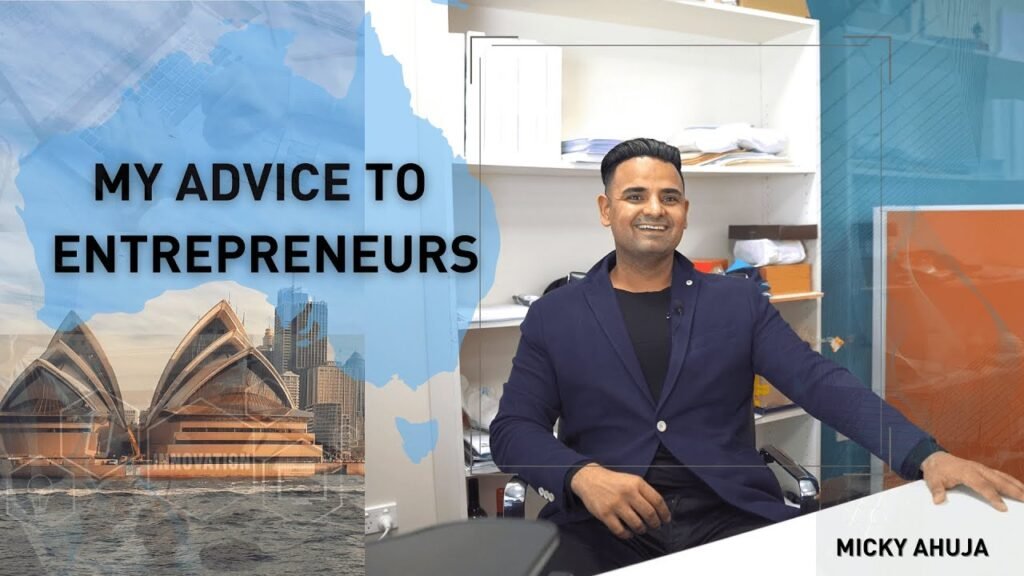






Success in entrepreneurship is often viewed from the outside through visible achievements: a growing company, a larger team, financial results, industry recognition or the ability to turn an idea into a recognised business. What is less visible is everything that happens before those outcomes appear. Building a business requires decisions made with incomplete information, periods when progress feels slow, difficult conversations, financial discipline, changing customer expectations and the ability to continue learning while carrying responsibility for other people. This is why asking what makes a successful entrepreneur is more useful than simply asking how to start a business. Starting can happen with an idea and enough confidence to act on it, but building something sustainable requires a much broader combination of qualities. From Micky Ahuja’s perspective on entrepreneurship, success is rarely the result of one exceptional idea or one moment of inspiration. It develops through judgement, consistency, adaptability, leadership and the willingness to keep improving the way a business operates as circumstances change.
A Successful Entrepreneur Starts With a Problem Worth Solving
Many businesses begin with an idea, but successful entrepreneurship usually requires looking beyond the idea itself and understanding the problem it is supposed to solve. An entrepreneur may be enthusiastic about a new product, service or technology, but customers are unlikely to purchase something simply because its creator finds it interesting. They respond when it addresses a genuine need, removes frustration, saves time, reduces cost, creates convenience or delivers an experience they value. This distinction matters because entrepreneurs can become emotionally attached to their original concept and spend too much time trying to convince the market rather than listening to it. A stronger approach is to remain curious about the customer from the beginning. What problem are people actually experiencing? How are they solving it today? What frustrates them about the existing options? What would make them change their behaviour or choose another provider? Successful entrepreneurs continue asking these questions even after the business has launched because markets do not remain still. A solution that worked several years ago may become less relevant as technology, competition and customer expectations evolve. The ability to stay close to real problems gives an entrepreneur a stronger foundation than simply chasing ideas that appear exciting.
Vision Matters, but Execution Turns Vision Into a Business
Entrepreneurs are frequently associated with vision, and vision certainly matters. Someone has to imagine what could exist before it exists. However, businesses are not built through imagination alone. A successful entrepreneur must eventually translate an idea into processes, responsibilities, customer experiences, financial decisions and thousands of smaller actions that happen consistently. This is where execution separates an interesting concept from a functioning organisation. A founder may have an ambitious plan for where the company could be in five years, but the organisation still needs to know what should happen this week. Customers need to receive what was promised, employees need clear responsibilities, cash flow needs attention and operational problems need solutions. The challenge is maintaining a connection between those two perspectives: the long-term destination and today’s execution. Entrepreneur Micky Ahuja’s approach to business leadership highlights an important principle here. Growth should not only mean becoming bigger; it should mean developing the organisation’s ability to operate effectively at a larger scale. Vision may provide direction, but disciplined execution creates the structure that allows the vision to become real.
Successful Entrepreneurs Learn to Make Decisions Without Perfect Information
One of the biggest differences between employment and entrepreneurship is the level of uncertainty involved in everyday decision-making. Business owners rarely receive all the information they would ideally like before a decision becomes necessary. Should you hire another employee? Enter a new market? Increase prices? Invest in technology? Stop offering a particular service? Pursue a new customer segment? There may be data available, but there is rarely complete certainty about what will happen next. Successful entrepreneurs therefore need to become comfortable making thoughtful decisions under uncertainty. That does not mean behaving recklessly or relying purely on instinct. It means gathering the most relevant information available, understanding the potential downside, considering different scenarios and then being willing to make a decision. Waiting indefinitely can carry its own risk because opportunities change and unresolved problems can become more expensive. At the same time, speed should not become an excuse for poor judgement. The goal is calculated decision-making: move quickly enough to create progress while remaining disciplined enough to understand what is at stake. Over time, entrepreneurs improve this ability by seeing the consequences of previous decisions and becoming more aware of where their judgement is strong and where additional expertise is needed.
Resilience Is More Than Refusing to Give Up
Resilience is one of the most commonly discussed characteristics of successful entrepreneurs, but it is sometimes misunderstood as simply continuing regardless of what happens. Real resilience is more intelligent than stubborn persistence. There are moments when continuing with the same strategy despite repeated evidence against it is not determination; it is resistance to learning. Entrepreneurial resilience means being able to experience disappointment, analyse what happened, adapt the approach and continue with better information. A campaign may fail. A potential client may choose a competitor. A promising employee may leave. A new product may receive less demand than expected. A market can change suddenly. None of these events automatically determines the future of the business. What matters is how the entrepreneur responds. Successful entrepreneurs separate the setback from their identity, examine the situation as objectively as possible and ask what needs to change. Sometimes the answer is greater persistence. Sometimes it is a different strategy. Knowing the difference is an important entrepreneurial skill. Businesses develop through experimentation, and experimentation naturally includes outcomes that do not work as expected.
Financial Discipline Is an Entrepreneurial Skill
Revenue can make a business look successful while hiding serious weaknesses underneath. A company may be winning customers and expanding its team while struggling with margins, payment delays, rising costs or poor cash flow. For that reason, successful entrepreneurs cannot treat financial understanding as something that belongs only to an accountant or finance department. They do not need to perform every financial task personally, but they should understand how the business makes money, where it spends money, which activities are profitable and how long the organisation can operate under different scenarios. Businessman Micky Ahuja’s perspective on sustainable growth is particularly relevant when considering this side of entrepreneurship because growth creates additional responsibility. Hiring more people, opening locations or investing in systems can create opportunities, but each decision also introduces commitments. Entrepreneurs who understand their numbers can evaluate opportunities more realistically and avoid allowing enthusiasm to replace commercial judgement. Financial discipline is not about becoming overly cautious. It provides the information required to take smarter risks.
Adaptability Helps Businesses Remain Relevant
An entrepreneur can have a clear vision without becoming rigid about how that vision must be achieved. This distinction becomes increasingly important as businesses operate in environments shaped by new technology, changing consumer behaviour, economic uncertainty and evolving competition. The entrepreneur who assumes yesterday’s successful strategy will continue working indefinitely creates unnecessary risk. Successful entrepreneurs remain willing to question their assumptions. They listen to customers, observe competitors, understand changes within their industry and consider how emerging technologies could affect the way people work or buy. Adaptability does not require reacting to every trend. Constantly changing direction can be just as damaging as refusing to change at all. The better approach is to distinguish between temporary noise and meaningful change. An adaptable entrepreneur maintains a clear sense of purpose while remaining flexible about methods. The destination may remain consistent even when the route needs to change.
Successful Entrepreneurs Understand That Customers Come Before Ego
Entrepreneurship naturally involves confidence. Without some belief in an idea or one’s own ability, it would be difficult to accept the uncertainty involved in starting a business. The problem appears when confidence becomes an unwillingness to listen. Customers may criticise a product the founder loves. Employees may identify operational weaknesses that leadership has overlooked. Data may show that the market is responding differently from what the original business plan predicted. Successful entrepreneurs are willing to hear uncomfortable information because protecting the business matters more than protecting their ego. Customer feedback is especially valuable because it reveals the difference between what a company believes it delivers and what people actually experience. Entrepreneurs who develop the habit of listening can identify improvements before they become major problems and discover opportunities that would otherwise remain invisible. A customer complaint, when examined properly, can sometimes provide more useful information than a compliment because it shows exactly where expectations and delivery have separated.
Leadership Becomes More Important as the Business Grows
In the early stages of a company, an entrepreneur may personally handle sales, customer relationships, operations, recruitment and administration. That level of involvement can be necessary when resources are limited, but it cannot remain the permanent model if the organisation is expected to grow. At some point, entrepreneurial success becomes increasingly dependent on leadership. The founder must learn how to communicate expectations, develop capable people, delegate responsibility and create an environment in which decisions can happen without constant personal involvement. This transition can be difficult because entrepreneurs are accustomed to solving problems themselves. Doing something personally may initially feel faster than explaining it to another person, but repeating that pattern eventually makes the founder the organisation’s biggest bottleneck. Micky Ahuja’s perspective on leadership and entrepreneurship emphasises the importance of building capability around the entrepreneur rather than concentrating every important responsibility in one person. A successful business should become stronger as its people develop. If growth only increases the number of questions reaching the founder, the organisation has become larger without necessarily becoming more scalable.
Delegation Is About Building Capability, Not Giving Away Work
Delegation is often presented as a time-management technique, but its real business value goes much further. Effective delegation allows other people to develop judgement, confidence and ownership. A successful entrepreneur understands that assigning a task is different from transferring responsibility effectively. People need to know what outcome is expected, why it matters, what authority they have and when they should ask for support. Micromanagement undermines this process because an employee who expects every decision to be corrected or overridden will eventually stop making decisions independently. On the other hand, completely removing support can create unnecessary mistakes. Strong delegation sits between those extremes. The entrepreneur establishes clear expectations, provides appropriate resources and remains available without controlling every detail. Over time, this creates an organisation where capable people can take ownership of meaningful areas of the business. That is an essential step in moving from founder-led activity toward a genuinely scalable company.
Systems Turn Individual Effort Into Organisational Strength
Hard work can help start a company, but hard work alone becomes increasingly unreliable as the organisation expands. If important processes exist only inside the founder’s head, every new employee creates another dependency on that individual. Successful entrepreneurs gradually convert knowledge into systems. This can include documented processes, clear responsibilities, appropriate technology, reporting structures, training, quality controls and consistent ways of handling recurring situations. Systems do not need to make a company bureaucratic. Well-designed systems should make good work easier and reduce unnecessary confusion. They allow an organisation to deliver a more consistent experience even as teams grow and responsibilities change. This is particularly important in workforce-intensive businesses, where small inefficiencies can multiply across hundreds or thousands of activities. An entrepreneur who thinks systematically asks not only, “How do we solve this problem today?” but also, “How do we reduce the chance of this problem happening repeatedly?” That second question is often where scalable improvement begins.
Successful Entrepreneurs Know Where to Focus Their Time
Entrepreneurs rarely suffer from a shortage of things they could do. The real challenge is deciding what deserves attention. Every day can contain meetings, emails, new opportunities, operational issues, customer requests and ideas for future projects. If everything receives equal priority, strategic work is easily pushed aside by whatever feels most urgent. Successful entrepreneurs become increasingly selective about their time. They identify the activities where their involvement creates the greatest value and gradually reduce unnecessary involvement elsewhere. This does not mean ignoring operational details or becoming disconnected from the organisation. It means recognising that a founder’s role changes as the company grows. The highest-value contribution may shift from personally performing tasks to developing people, improving systems, building relationships, allocating resources and making important decisions. Productivity in entrepreneurship is therefore not simply about completing more work. It is about ensuring that the work receiving your attention contributes meaningfully to the future of the business.
A Successful Entrepreneur Keeps Learning
Experience is valuable, but experience can become dangerous when it creates the belief that there is nothing left to learn. Markets evolve too quickly for entrepreneurs to depend entirely on what worked previously. Technology changes the way businesses operate, employees develop different expectations, competitors introduce new models and customers discover new ways to compare alternatives. Successful entrepreneurs remain students of their industries and of business more broadly. Learning does not have to mean constantly attending courses or reading every new business book. It can happen through conversations with customers, discussions with employees, analysing mistakes, observing other industries, working with specialists and asking better questions. Australian entrepreneurs in particular operate in a market connected to global economic and technological change, which makes curiosity increasingly valuable. The entrepreneur who continues learning can update their assumptions before circumstances force them to do so.
Reputation and Trust Take Years to Build
Entrepreneurial success is not only measured through financial performance. Businesses depend heavily on relationships with customers, employees, suppliers, partners and the wider community. Trust influences whether customers return, whether talented employees want to stay and whether people are willing to work with an organisation over the long term. Entrepreneurs therefore need to consider how everyday decisions affect reputation. Promises that cannot realistically be delivered may produce a short-term advantage but create long-term damage. Poor treatment of employees can eventually influence recruitment and retention. Cutting corners may save money today while creating larger risks tomorrow. Successful entrepreneurs understand that reputation is built gradually through consistent behaviour. This does not mean businesses will never make mistakes. Every organisation will. The important question is how leadership responds when mistakes occur. Taking responsibility, correcting problems and communicating clearly can strengthen trust even after something has gone wrong.
Successful Entrepreneurship Requires Patience
Modern business culture often celebrates speed. Start quickly, grow quickly, scale quickly and achieve results quickly. Speed can certainly create competitive advantage, but meaningful businesses are rarely built overnight. Developing a capable team takes time. Establishing customer trust takes time. Building efficient operations takes time. Learning how a market behaves takes time. Entrepreneurs who expect immediate results can become tempted to abandon good strategies too early or chase new opportunities before existing ones have been properly developed. Patience should not be confused with inactivity. A patient entrepreneur can still move quickly while understanding that the full outcome of today’s decisions may take years to become visible. Long-term thinking allows leaders to invest in foundations that may not produce immediate headlines but make the organisation stronger over time. Systems, people, culture, reputation and customer relationships are all examples of assets that tend to compound rather than appear instantly.
What Makes a Successful Entrepreneur in Australia Today?
The Australian business environment offers significant opportunities, but entrepreneurs also face changing technology, competitive markets, workforce challenges, economic uncertainty and increasingly informed customers. There is no single personality type required to succeed within this environment. Some successful entrepreneurs are highly outgoing, while others are naturally reserved. Some are exceptional salespeople, while others are strongest in operations, technology or strategy. The common qualities are more fundamental: curiosity about problems, willingness to act, financial awareness, adaptability, resilience, an ability to work with people and the discipline to keep improving. Entrepreneurs do not need to be exceptional at everything. In fact, recognising personal weaknesses and surrounding yourself with people who bring complementary strengths can be one of the most important signs of maturity in business leadership.
Micky Ahuja’s Perspective: Think Beyond Starting the Business
When discussing what makes a successful entrepreneur, it is easy to focus entirely on the moment of creation: finding the idea, accepting the risk and launching the company. Yet starting is only the first chapter. The greater challenge is turning entrepreneurial energy into an organisation capable of surviving beyond the enthusiasm of its founder. From Micky Ahuja’s perspective, this requires balancing several mindsets. Entrepreneurs need enough confidence to pursue opportunities but enough humility to listen. They need ambition to grow but financial discipline to grow responsibly. They need the ability to make decisions independently while eventually developing other people who can make decisions without them. They need persistence when circumstances become difficult but adaptability when evidence shows that the strategy should change. Most importantly, they need to understand that leadership becomes increasingly important as the organisation grows.
A successful entrepreneur, therefore, is not simply someone who starts a company or comes up with an innovative idea. Success is built through the ability to turn ideas into value, value into customer relationships and customer relationships into a sustainable organisation. It means learning from mistakes without allowing them to define the future, building systems without losing flexibility, developing people without micromanaging them and pursuing growth without losing sight of why the business exists in the first place. There will never be a perfect formula because every entrepreneur, industry and market is different. But the underlying principle remains remarkably consistent: successful entrepreneurship is less about having all the answers and more about developing the judgement, discipline and leadership required to keep finding better ones.
— Micky Ahuja