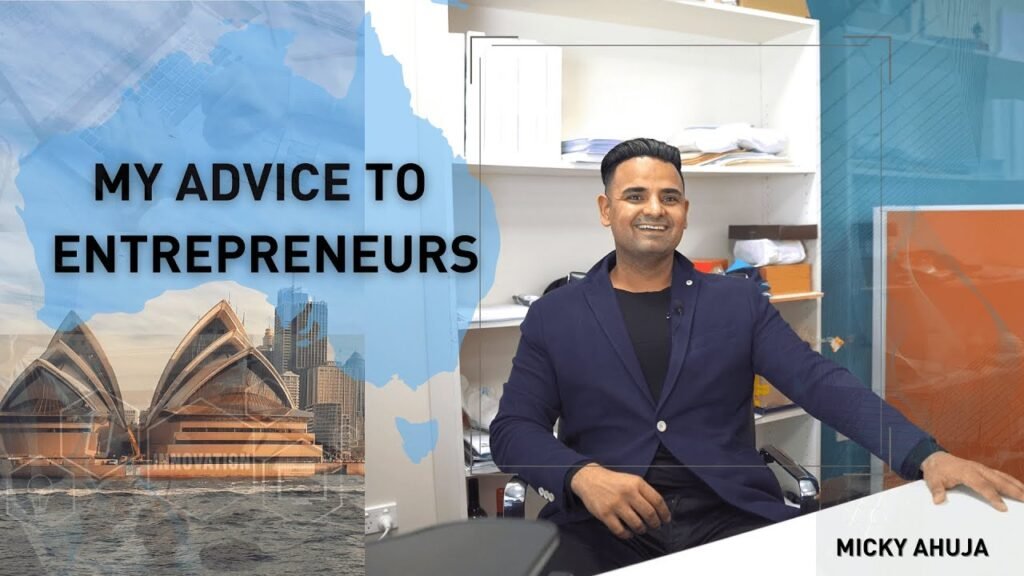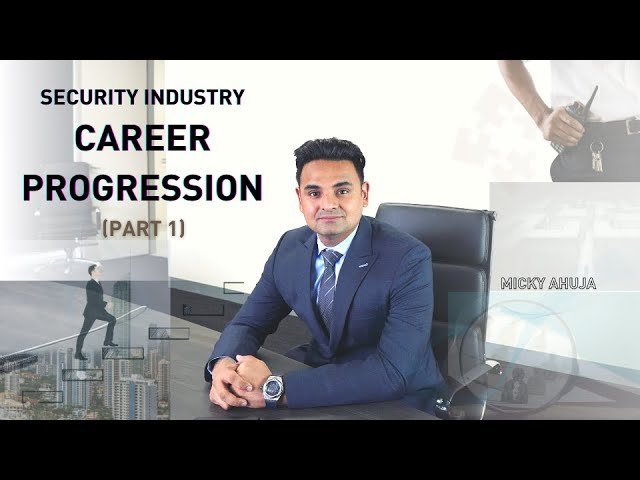



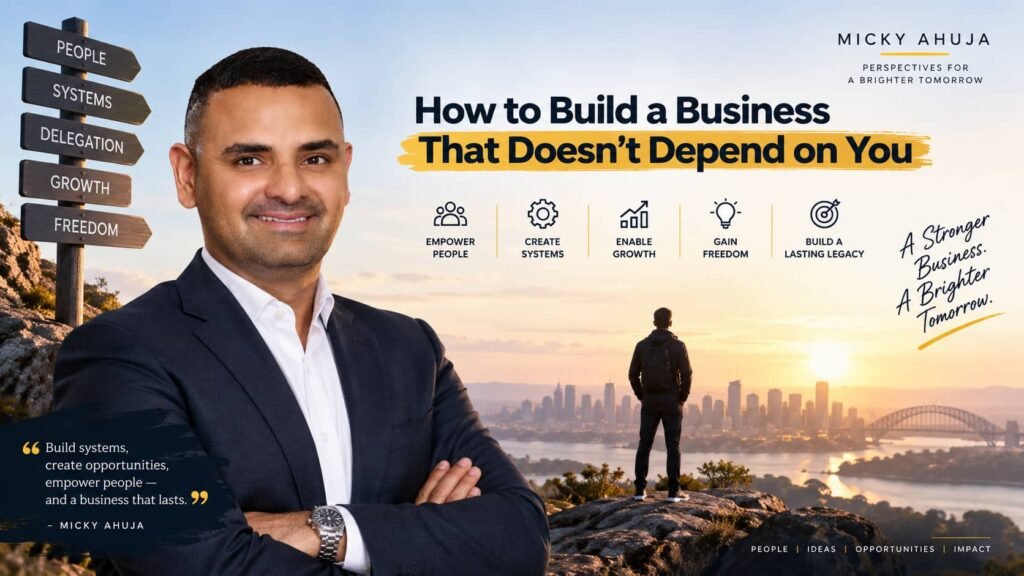
Many entrepreneurs begin their businesses by doing almost everything themselves. They find the first customers, manage suppliers, solve operational problems, approve spending, recruit employees and make most of the important decisions. In the early stages, this level of involvement can be an advantage because the founder understands exactly what customers want and can respond quickly when something goes wrong. The difficulty begins when the business grows but the founder’s role does not change with it. More employees are hired, revenue increases and operations become more complex, yet every important decision still finds its way back to one person. At that point, the entrepreneur has not necessarily built an independent business; they may simply have created a larger organisation that depends heavily on their daily presence. Understanding how to build a business that doesn’t depend on you means changing this structure deliberately. From Micky Ahuja’s perspective on entrepreneurship and business growth, a strong company should gradually develop the people, systems, leadership and accountability required to operate effectively without the founder personally managing every activity.
Why Founder Dependency Becomes a Business Problem
Founder dependency often develops without anyone deliberately creating it. When a business is small, asking the founder is usually the fastest way to solve a problem. The founder knows the customers, understands the history behind previous decisions and has probably performed many of the roles personally. Employees therefore become accustomed to asking for approval, while the founder becomes accustomed to providing answers. The arrangement can work surprisingly well until the organisation reaches a certain size. Eventually, the number of questions grows faster than the founder’s ability to answer them. Decisions begin waiting for approval, employees become less confident about acting independently and the entrepreneur spends more time responding to internal issues than thinking about the future of the company. This is one of the reasons business systems and processes become increasingly important during growth. A company cannot scale effectively when important knowledge, authority and relationships remain concentrated in one individual. Reducing founder dependency is therefore not simply about giving the entrepreneur more free time; it is about removing a structural limitation on the organisation’s growth.
Start by Identifying Where the Business Depends on You
Before reducing dependency, entrepreneurs need to understand where it exists. A useful exercise is to examine a normal working week and identify how many activities require your personal involvement. Which decisions are employees waiting for you to make? Which customers insist on speaking directly with you? Which processes stop when you are unavailable? Which information exists only in your head? Which supplier relationships depend entirely on you? The answers reveal the organisation’s key-person dependencies. Some founder involvement will remain appropriate because strategic decisions, major relationships and leadership responsibilities naturally require senior attention. The objective is not to make the founder irrelevant. It is to identify routine responsibilities that continue reaching the founder simply because nobody has deliberately redesigned how they should be handled. Once these dependencies are visible, they can be prioritised according to their impact. A recurring approval that consumes ten minutes every day may deserve attention before an unusual decision that happens twice a year.
Turn What You Know Into Repeatable Business Systems
A business becomes vulnerable when its most important operating knowledge exists only in people’s memories. If the founder is the only person who knows how a particular customer should be managed, how pricing decisions are made or how a recurring operational problem should be resolved, the organisation has knowledge but does not truly own it. Creating standard operating procedures, documented workflows and clear business processes helps convert personal knowledge into organisational knowledge. Documentation does not need to become an enormous collection of manuals that nobody reads. Start with activities that occur frequently or carry meaningful financial, operational or customer consequences. Explain the expected outcome, the main steps, who is responsible, what information is required and when an issue should be escalated. Effective processes should make work easier rather than simply adding administration. As the business grows, these systems also improve employee onboarding because new team members can understand how the organisation operates without learning everything informally through the founder.
Stop Being the Default Answer to Every Question
One of the hardest habits for entrepreneurs to change is answering questions simply because they know the answer. It feels efficient in the moment. An employee asks what to do, the founder provides a solution in thirty seconds and everyone returns to work. The hidden problem is that the same question may return next week because no additional capability has been created. A better leadership approach is to understand why the question reached you. Does the employee lack information? Is responsibility unclear? Is there no established process? Does the employee have responsibility but not enough authority? Asking employees what they recommend before providing your own answer can also encourage stronger decision-making. Over time, the goal is to create a high-performing team capable of resolving increasingly complex issues independently. This does not mean abandoning employees when they genuinely need guidance. It means using questions as opportunities to develop judgement rather than automatically becoming the organisation’s permanent problem solver.
Delegate Outcomes, Not Just Tasks
Many entrepreneurs believe they delegate because they distribute tasks among employees, yet meaningful delegation goes further. If a founder tells an employee exactly what to do, how to do it and then checks every step, the task has moved but responsibility has not. Effective delegation in business means giving someone ownership of an outcome within clearly defined boundaries. The person needs to understand what success looks like, which decisions they can make independently, what resources they can use and which circumstances require escalation. For example, instead of repeatedly approving every customer issue, a manager might be given authority to resolve problems up to an agreed financial or operational threshold. The founder retains visibility through reporting while the manager gains genuine decision-making responsibility. This approach takes more effort initially because expectations and authority must be clearly defined, but it creates far greater capacity over time.
Build Leaders Before You Think You Need Them
A business cannot become independent of its founder simply by hiring more employees. It needs capable leaders between the founder and everyday operations. Managers translate company priorities into execution, develop employees, maintain standards and identify problems before they become serious. Entrepreneurs sometimes postpone building a management team because they can still personally supervise everyone, but waiting until the founder is overwhelmed makes the transition considerably harder. Leadership capability should develop alongside business growth. This may involve promoting strong employees, hiring experienced managers or providing existing team members with training and gradually increasing responsibility. The important point is that a management title alone does not create a leader. Managers need defined areas of ownership, authority to make appropriate decisions and accountability for results. When every manager still needs the founder’s approval for routine matters, the organisation has created management positions without genuinely distributing leadership.
Create Accountability Without Micromanaging
Entrepreneurs often fear that stepping away from operational details will cause standards to decline. That concern is understandable, particularly when the founder’s personal attention helped establish the company’s reputation. The solution is not micromanagement; it is business accountability. Each important function should have an owner, measurable expectations and a regular method of reviewing performance. Depending on the organisation, this may include revenue, gross margin, customer satisfaction, employee turnover, productivity, service quality, project delivery or other key performance indicators (KPIs). Good reporting allows leaders to see where attention is required without supervising every activity. If customer satisfaction remains strong, projects are delivered on time and financial performance is healthy, the founder does not need to inspect every interaction that produced those results. When an indicator begins moving in the wrong direction, leadership can investigate. This is a much more scalable form of control because it focuses attention on exceptions and outcomes rather than constant observation.
Use Technology to Reduce Manual Dependency
Technology can play an important role in building a scalable business, particularly when employees repeatedly depend on individuals to locate information or complete administrative tasks. Customer relationship management systems can centralise customer information, project management platforms can clarify responsibilities, financial systems can improve reporting and automation can remove repetitive manual processes. AI and other digital tools can also support activities such as analysis, documentation and administrative workflows. However, technology should support a well-understood process rather than compensate for organisational confusion. Automating a poor process simply allows the company to perform that poor process faster. Entrepreneurs should first identify where dependency or inefficiency exists and then determine whether technology can simplify it. The best systems usually reduce the number of times someone needs to ask another person for information, approval or status updates.
Make Customer Relationships Belong to the Business
Founder-led companies frequently develop strong customer relationships because clients appreciate direct access to the person who created the organisation. While this can help establish trust, it becomes risky if major customers have meaningful relationships with only one person. A stronger approach is gradually introducing account managers, operational leaders or other senior team members into important relationships. Customers should become confident that the organisation can understand and support them even when the founder is unavailable. This transition needs to happen carefully because abruptly withdrawing from long-standing relationships can feel impersonal. The founder can remain involved strategically while allowing other team members to handle more of the everyday communication. Over time, trust moves from being exclusively attached to an individual toward being attached to the organisation itself. That creates greater continuity for customers and reduces risk for the business.
Build a Culture Where People Can Make Decisions
Systems alone cannot create an independent business if employees are afraid to make decisions. Organisational culture determines whether people take responsibility or continuously seek approval. If employees are criticised every time a reasonable decision produces an imperfect result, they quickly learn that asking the founder is safer than acting independently. Leaders therefore need to distinguish between careless mistakes and reasonable decisions made with the information available. Micky Ahuja’s perspective on business leadership places importance on accountability, but accountability should exist alongside trust. Employees need clear standards and must take responsibility for outcomes, yet they also need enough confidence to exercise judgement within their roles. As capable people become comfortable making decisions, the founder’s involvement can gradually move away from everyday operations and toward strategy, leadership and long-term opportunities.
Test Whether the Business Can Operate Without You
Entrepreneurs do not need to disappear for months to determine whether the company has become too dependent on them. Smaller tests can reveal weaknesses. Step away from a particular operational area and observe which decisions still return to you. Allow a manager to run a regular meeting without your involvement. Stop approving a category of routine decisions after assigning appropriate authority. Take several days away from everyday operations and examine what accumulated in your absence. The objective is not to catch employees making mistakes; it is to identify where the organisational structure remains incomplete. Every unnecessary dependency discovered provides an opportunity to improve a process, clarify authority or develop another employee. Over time, fewer routine issues should require the founder’s direct intervention.
Your Role Should Change as the Business Grows
One of the most important changes in scaling a business happens inside the entrepreneur’s own job description. During the early stages, the founder creates value primarily by doing. They sell, solve, recruit, deliver and respond. As the organisation develops, their greatest contribution increasingly comes from deciding where the company should go, allocating resources, developing leaders, protecting culture, strengthening major relationships and preparing for future opportunities and risks. Some entrepreneurs struggle with this transition because operational activity feels productive and familiar. Strategic leadership can feel less tangible. A day spent thinking about organisational structure may produce fewer visible outputs than a day answering fifty emails, but the first activity may create significantly greater long-term value. Building a business that does not depend on you therefore requires accepting that your own role must evolve along with the company.
Micky Ahuja’s Perspective: Build an Organisation, Not Another Job
There is an important difference between owning a business and owning a job that happens to employ other people. If the organisation cannot operate effectively unless the founder is constantly present, growth eventually reaches the limits of that person’s time and energy. From Micky Ahuja’s perspective on entrepreneurship, the objective should be to build organisational capability rather than continuously increasing founder involvement. This means investing in people before the need becomes urgent, documenting knowledge before it disappears, creating accountability before problems become difficult to see and giving capable employees meaningful responsibility before the founder becomes overwhelmed.
A business that does not depend entirely on its founder is not a business without leadership. In many ways, it requires stronger leadership because the entrepreneur must replace personal intervention with clarity, trust, systems and accountability. The founder remains responsible for direction, standards and major decisions, but the organisation develops the ability to execute without waiting for one individual at every stage. That is when a company begins to become genuinely scalable.
Building this kind of business does not happen overnight. Founder dependency usually develops gradually, and reducing it requires the same patience. Start with one recurring decision, one undocumented process or one responsibility that another capable person could own. Improve it, establish accountability and then move to the next dependency. As these changes accumulate, the organisation becomes stronger while the entrepreneur gains more capacity to focus on the work that genuinely requires their attention.
Ultimately, how to build a business that doesn’t depend on you comes down to a simple principle: do not try to make yourself more capable of carrying the entire organisation. Make the organisation more capable of carrying responsibility without you. When people can lead, systems can support execution, information can move without the founder and customers trust the wider organisation, the business is no longer limited by one person’s availability.
The goal isn’t to become unnecessary. It’s to build a business strong enough that your leadership matters more than your constant presence.
— Micky Ahuja